Water By Terry McCarthy, publisher of Nashville Home Pros Magazine · November 6, 2026 · 5 min read
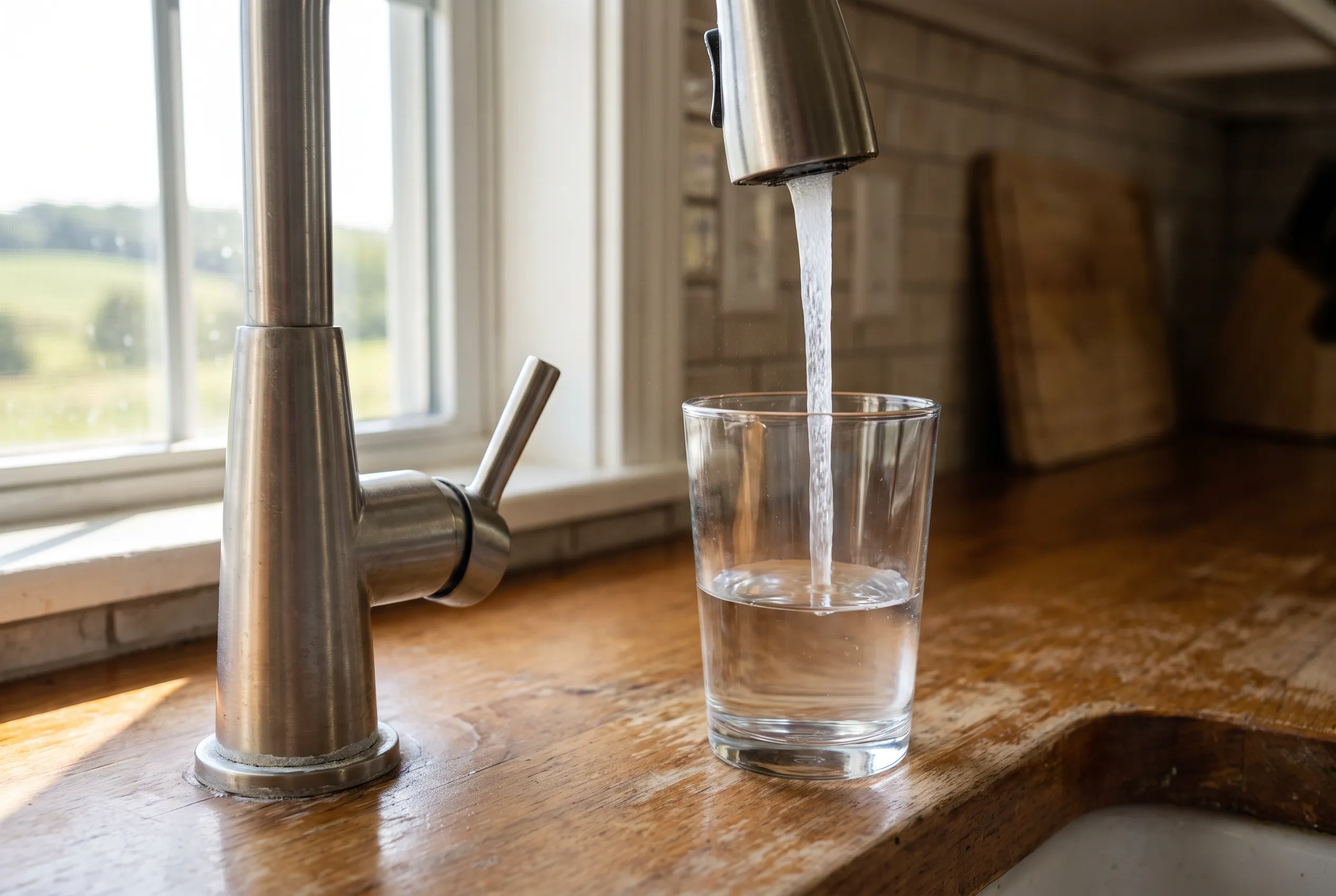
Metro Water’s older plant went up in 1889. Omohundro can treat up to 90 million gallons a day of Cumberland River water, and K.R. Harrington, built in 1976, up to 112 million. On a bad night one of them can stop: Harrington shut down at 7:35 p.m. on May 2, 2010, as Metro’s flood report records and our cover story tells. In an ordinary year the news is quieter. Metro’s report for last year, for over 226,500 customers, carries this line: “Zero drinking water violations in 2025” (Metro Water’s 2025 report).
That sentence describes Metro’s water and nobody else’s.
Your water depends on who serves your house
We read four reports for 2025: Metro Water Services, the City of Brentwood, Milcrofton Utility District in Williamson County, and Hendersonville Utility District in Sumner County. These are the four we could get. Franklin’s documents and Murfreesboro’s site refused us, and we found no usable 2025 report for White House, West Wilson, Lebanon, Harpeth Valley or Mallory Valley.
Nor can we tell you from these documents who serves Belle Meade, Bellevue or Germantown. Metro’s report says only that it serves customers throughout Metropolitan Nashville-Davidson.
One river, four sets of numbers
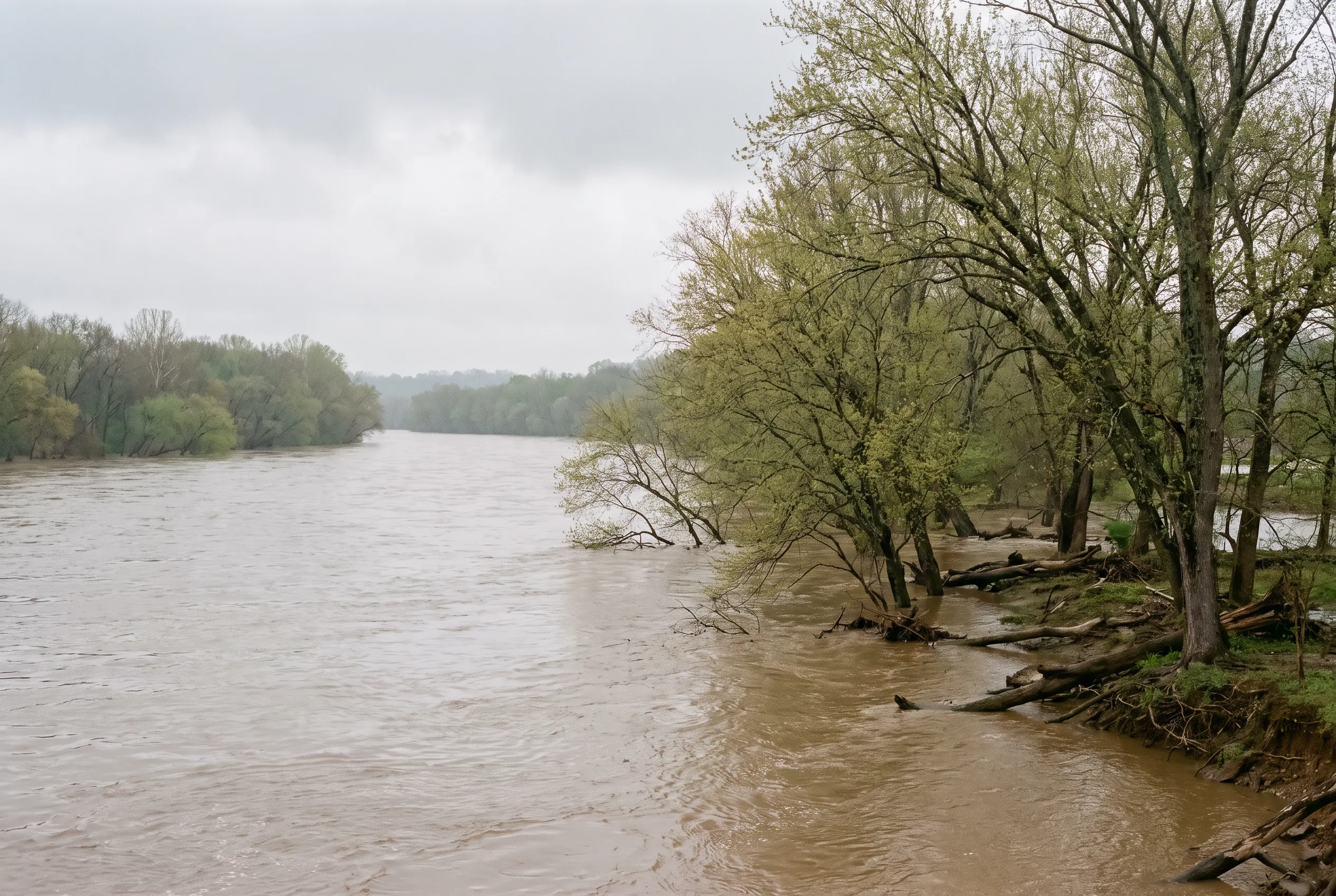
All four trace back to the Cumberland. Metro treats it directly. Brentwood’s report says its water comes from the river through Metro and Harpeth Valley. Milcrofton’s says its river water is treated by Harpeth Valley, and that it also buys from Mallory Valley, which buys from Harpeth Valley. Hendersonville’s intake sits near Rockland Park on Old Hickory Lake, “fed by the Cumberland River.”
The numbers still differ. As printed, with the year each one was measured:
| Utility | Total hardness | Lead, 90th percentile | Total trihalomethanes | Haloacetic acids | Fluoride |
|---|---|---|---|---|---|
| Metro Water | 100.5 mg/L (2023) | 0.8 ppb (2025) | 12.1 µg/L (2025) | 7.4 µg/L (2025) | 0.67 mg/L (2025) |
| Brentwood | 98 ppm (2025) | 1.0 ppb (2023) | 46.50 ppb (2025) | 24.75 ppb (2025) | 0.67 ppm (2025) |
| Milcrofton | 98 ppm (2025) | Non-detect (2023) | 52.0 ppb (2025) | 32.2 ppb (2025) | 0.53 ppm (2025) |
| Hendersonville | Not in its table | 1.0 ppb (2025) | 22.4 ppb (2025) | 19.9 ppb (2025) | 0.404 ppm (2025) |
Metro’s last three columns come from its separate data sheet, which, like Milcrofton’s report, lists the limit for trihalomethanes at 80 and for haloacetic acids at 60. Every figure for those two is under them. The spread between Metro’s 12.1 and Milcrofton’s 52.0 is wide, and none of these reports explains it, so we won’t guess.
Two more lines belong beside the table. The state’s rating of the Cumberland as a source is “highly susceptible to potential contamination” in Metro’s report, the same one that records zero violations, and “reasonably susceptible” in Hendersonville’s, which says it tested for over 80 contaminants and “we only detected 12.” Brentwood’s report discloses coliform findings that required one Level 1 and two Level 2 assessments, with corrective actions completed.
Hardness, in grains per gallon
Metro calls its water “moderately hard.” The hardness comes from limestone, its report says, and treatment doesn’t remove it. The report also supplies the conversion: 17.1 mg/L is one grain per gallon, which makes Metro’s 100.5 about 5.9 grains by our arithmetic. Milcrofton prints its own figure, 5.73 grains. Brentwood prints none; the same conversion turns its 98 ppm into about 5.7.
Don’t confuse Metro’s total with its calcium numbers. The data sheet lists “Hardness (Calcium)” at 75.3 mg/L, and the report’s 2023 table has calcium hardness at 79.5.
Rutherford County may run differently, though we can’t say so for today. Consolidated Utility District’s FAQ still gives “The average hardness for 2009 was 193 which equals 11.3 grains.” That figure is 17 years old, from a utility on another source, the East Fork of the Stones River at J. Percy Priest Lake. We didn’t get its 2025 report.
Lead and copper at the faucet
Metro says no lead leaves its plants, and it has run blended phosphate corrosion control since 1987. At 85 tap sites in 2025, none topped the action level, with readings from under 0.10 to 7.1 ppb. Copper’s 90th percentile was 0.130 ppm against an action level of 1.30; Milcrofton’s was 0.0934, Brentwood’s 0.0594 and Hendersonville’s 0.0586.
Brentwood and Milcrofton each sampled 30 homes in 2023, with none over the level; Brentwood’s highest reading was 7.57 ppb. Both report finding no lead service lines, Brentwood in a 2024 inventory. Hendersonville sampled in July 2025, read 1.0 to 3.92 ppb and lists no household over the level. Its table gives that level as 10 ppb, while Metro’s data sheet gives 0.015 mg/L, or 15 ppb. We’re printing them as they appear; we didn’t look into why they differ.
PFAS, where the reports say anything
Metro tested water leaving its plants voluntarily from 2015, then in 2019, 2021 and 2023, and reports “no reportable levels,” with non-detect in November 2023. It states no result for 2024 or 2025. Milcrofton lists six compounds, PFOA, PFOS, PFHxS, GenX, PFNA and PFBS, each “No Detection.” The Brentwood and Hendersonville reports we read have no PFAS line. Metro’s report describes an EPA rule from April 10, 2024; we didn’t check where that rule stands now.
Finding the report for your own house
Sources
- Metro Water Services: 2025 Consumer Confidence Report
- Metro Water Services: Water Quality Report 2025 (data sheet)
- Milcrofton Utility District: Water Quality Report for 2025
- City of Brentwood Water Services: 2025 Water Quality Report
- Hendersonville Utility District: Water Quality Report, 2025 test results
- Consolidated Utility District of Rutherford County: Water quality FAQ
- City of Murfreesboro: Water Quality Report page, not opened
- Metro Nashville Office of Emergency Management: After Action Report/Improvement Plan, July 6, 2011
This story runs online only. Every fact in it is linked to the page it comes from, read on November 6, 2026. See something that has changed? Send us a note.